Monday, January 30, 2017

5 Common Mistakes That Cause Falls on the Job

Falls on construction jobs are the leading cause of death, with nearly 300 fatalities in 2013. While some accidents are unavoidable, many falls result from mistakes that could have been prevented which only adds to the tragedy. Being aware of the common mistakes that cause falls on the job can go a long way toward making the workplace safer.

Incorrect Equipment

Incorrect equipment takes on several fronts. It could involve equipment that is inappropriate for certain tasks. Body belts, for example, can help you get into proper position and prevent falls. However, they offer no protection if one occurs.

If the potential for a fall exists, it is imperative to use a full body harness. If you work at heights of six feet or greater, you’ll need a Personal Fall Arrest System (PFAS). It consists of a full body harness, lanyard/lifeline, and secure anchor points.

All components are necessary to protect you from the risk of a fall as well as its impact if one occurs. When used properly, it could save your life or that of a co-worker. Likewise, certain jobs require equipment that can handle the particular hazards of some tasks.

Workers who use welding equipment should opt for a body harness that has webbing which is burn resistant and arc-flash protective. A worker who needs to reach sites by climbing should use a harness with a frontal attachment point.

While you’ll find different types of harnesses, connecting devices, and anchor points, that doesn’t mean that these parts are interchangeable. So the mistake of using incorrect equipment also includes not using the right parts in the PFAS. These systems are designed to work in concert with the other components.

Failure to Inspect Equipment

Before using a PFAS, you should inspect all components including the harness, connection, and anchor point. The harness is of particular importance since it will help distribute the force of a fall to reduce the risk of injury that can occur even if you don’t fall.

The impact of a sudden stop can cause serious bodily harm. The Occupational Safety & Health Administration (OSHA) recommends bending 6-inch increments of the belt of the harness and examining it for signs of damage like wear, frays, or cuts. You should also make sure that the rivets are intact and lie flat against the material.

This inspection is essential prior to using a body harness. It may seem unnecessary especially for something that gets frequent use. However, a small tear is much easier to repair than one that has gone undetected. In the meantime, everyone using the same equipment is at risk for a fall because of this avoidable mistake.

Damaged Equipment

Using damaged equipment puts you at a greater risk for a fall. A PFAS can only protect you as well as the integrity of your gear remains intact. Damage from whatever cause represents a weak point that can give way in a critical situation.

Equipment with tears or any other sign of deterioration should be repaired by an authorized service center or destroyed. It’s essential that damaged safety gear is not placed back into general use. That is what makes an inspection of the equipment critical whether it’s before a single use or as part of an annual inspection of safety equipment.

This measure also applies for harnesses that show signs of impact from a damaged fall indicator. These harnesses should never be reused. Store safety equipment in a clean, dry space out of direct sunlight to prevent damage caused by environmental factors.

Along with regular inspections, these simple measures can ensure a safe workplace and prolong the life of a PFAS by keeping it in proper working order and repair.

Improper Use

The best safety equipment does little good to prevent falls if you don’t use it correctly. That means ensuring that a body harness fits properly before going on the job. Your body harness should fit snug, but not too tight to avoid creating pressure points.

You should also adjust your chest strap so that it doesn’t sit too high on your sternum to avoid injury in case of a fall. You should position your back strap so that you don’t sit too far forward or too far back in the harness. Failure to do so could result in you falling out of the harness.

The proper fit will ensure that the force of a fall goes from the D-ring down the back strap to the sub-pelvic straps where your body can best handle the impact of an arrested fall.

Lack of Training

Most accidents can be avoided with proper instruction about the use and care of safety equipment. Your supervisor should instruct all workers how to use the equipment as well as how to recognize the damage that could lead to failure. No one should use a PFAS without training by a competent person. Lack of training also applies if a work site has changed in some way that can affect current fall protection procedures.

If changes are made to the site or your plan, retraining by a component person with proper experience and authority is essential no matter how long everyone has been on the job. However, the training doesn’t stop with equipment use. It should also include a plan for rescue in the event of a fall that has been arrested. While a PFAS will prevent a free fall, a rescue plan is necessary to reduce the risk of suspension trauma caused by an incapacitated worker left in an upright position for too long.

 Often, falls on the job can be prevented by simply using the proper equipment in the right way. That means ensuring it is in good shape without damage that could cause it to fail. It is both the responsibility of the employer to provide training and for the employee to learn all that it entails. Only then can you prevent falls caused by common mistakes.

Monday, December 19, 2016

Top OSHA Violations and How You Can Avoid Them

Violating federal government guidelines is serious and can shut down your new project. The United States Department of Labor publishes a list through the Occupational Safety and Health Administration (OSHA) on a frequent basis to inform employers of the guidelines, the most common violations, and how to fix them before an on-site inspection.
The following overview lists the top most frequently cited standards during an inspection. By following the guidelines to avoid OSHA violations, you can increase the safety rating in your workplace while reducing the number of accidents and falls.
Be on the Look-Out for These OSHA Violations
The following is a list of the top ten most frequently cited OSHA violations as of 2016 for the Fiscal Year of 2015 and brief overview of each:
  • Not Following Fall Protection Standards – A worker on elevations higher than four feet in the general industry, five feet in shipyards, and six feet in construction zones should wear a persona fall protection system, use a guardrail system, or safety net systems. This includes workers working on areas with unprotected sides and edges, leading edges, hoist areas, holes including skylights, formwork and reinforcing steel, overhand and bricklaying work, roofing work on low-slope and steep roofs, precast concrete erections, wall openings, residential construction, and more.
  • Not Following Hazard Communication Standards – Employers and workers should always be aware of the types of chemicals and the hazards associated with those. Each chemical should be classified correctly and include a list of hazardous chemicals that are clearly labeled. All employees should be trained regarding the handling of these chemicals during processing, storage, and emergencies. Safety data sheets should be distributed among the workers.
  • Not Following Scaffolding Standards – All scaffolding should be able to support its own weight and up to four times the maximum load without collapsing. The suspension rope that is used on scaffolding needs to hold at least six times the maximum load and each platform should be fully planked or decked appropriately. Each scaffold and planks should measure correctly for the maximum distance depending on the scaffolding’s operations.
  • Not Following Respiratory Protection Standards – Employees working in the general industry, shipyards, marine terminals, longshoring, or construction industries should take precautions against respiratory issues by using personal protective equipment such as respirators.
  • Not Following Lockout and Tagout Standards – Several standards are listed for lockout and tagout processes, but include the servicing and maintenance of machines that if turned on could release energy or be physically capable of harming employees.
  • Not Following Powered Industrial Truck Standards – Employers need to take appropriate measures to ensure the safety of all workers in regards to the fire protection, design, servicing, and use of forklift trucks, tractors, motorized trucks, and other industrialized vehicles.
  • Not Following Ladder Standards – Ladders should be able to withstand up to four times the maximum load with notable exceptions and the rungs should be appropriately distanced from each other. Self-retracting lifelines and rest platforms at intervals are not to exceed 150 feet.
  • Not Following Electrical and Wiring Methods Standards – This standard includes the effective bonding of grounding conductors such as metal raceways, cable trays, cable armor, cable sheath, enclosures, frames, fittings, and more.
  • Not Following Machine Guarding Standards – Guarding methods can include barrier guards, two-hand tripping devices, electronic safety devices, and more to protect workers from flying parts, pieces, sparks, and other hazards while working.
  • Not Following Electrical and General Requirements – Each electrical equipment or conductor needs to be approved, examined, and suitable for the job.
How to Avoid OSHA Violations at Work
The number one OSHA violation listed is not following fall protection standards. Falling at a worksite not only can lead to injury and paralysis, but in many cases, death. OSHA reports that 359 out of 899 total deaths on construction sites were due to falls in the 2014 calendar year (39.9 percent).
Out of the top ten OSHA violations listed, 6,721 fall protection violations were cited. OSHA plans to increase the penalty amount for future violations. These fines have not been raised in decades and topped at $7,000 per exposed worker and $70,000 per person for serious violations.
The increase will allow OSHA to fine companies close to $12,500 per worker for violations and $125,000 per worker for serious or repeated willful violations. These new penalties went into effect on August 2, 2016.
A few of these OSHA violations can be avoided by using the appropriate fall protection systems including universal safety harnesses, tower harnesses, retrieval harnesses, and lifeline rope. The type of safety equipment you use will depend on the nature of your work.
Harness Land products are OSHA and ANSI compliant and made with a durable construction to meet the demands of the worker. You can find safety harnesses of all types, lanyards, retractable lifelines, anchor points, fall arrest systems, fall protection kits, and rescue systems. The company also offers confined space equipment including tripods with a winch and working suspension chairs.
The staff at Harness Land can help with fall distance calculations to assist you with anchorage and measurements for a shock-absorbing lanyard and D-ring anchorage connector or a retractable lifeline. You can also find useful frequently asked questions and tips to keep your fall protection system in working order, such as never modifying your harness or equipment and only hand washing harnesses.
You will also find safety gear at Harness Land which an inspector may look to see if you keep on hand in the event of an emergency. This includes first aid kits, eye protection, hard hats, safety apparel, material lifting, and heat stress safety.
You can find a variety of brands at Harness Land including Guardian Fall Protection, Jackson Safety, Elk River Fall Protection, MSA Safety, Genuine First Aid, Protecta, Radians Safety Wear, and more.
Whether you are working on a roof, construction site, ladder, or scaffolding, you can find the type of harness or fall protection system you need from Harness Land to avoid OSHA violations.

Monday, October 24, 2016

5 Tips for Protecting Against High Falls


At the workplace, your job description may involve accessing the top of the machines, large vehicles, and sometimes even buildings. This means that you will need to climb a certain height to perform your job efficiently. Whether you are working on a construction site or are involved in the maintenance tasks in industries, working at heights is always riskier than working on ground level.


What’s more, your job may not be limited to a particular area; you may have to move on to different areas carrying your tools with you. One slip or a slight imbalance may even cost you your life in such situations. This is why it is important for you to utilize some type of fall protection equipment on such jobs.
The industries set forth certain safety guidelines, ensure that you follow these strictly because they are there for your own good. By following them, you will be able to work efficiently without taking any unnecessary risk. Here are five tips to protect you against high falls at your workplace.
  1. It is always good to plan in advance.
Perhaps, the most important thing that you can do to protect yourself against high falls is prepare well in advance for your job. What this means is that go through your job description and understand what it is that you have to do. You can check with your job coordinator about the equipment used as well as the training you will need to perform the job safely. You must also ensure that you are well versed with the safety rules and guidelines specified by the company you work for. If you have any doubts or questions regarding your job, do not hesitate to ask about it.

  1. Using proper equipment is a must.
What equipment you use will change depending upon the type of work you are asked to do. You cannot use a ladder for a job that requires you to stay at a certain height for a long time, it’s just not safe. If you are planning to work in high places for a long period of time, it is important for you to wear fall protection equipment such as climbing harnesses, helmets, and anchors.

Using such equipment ensures that you are protected at all time against high falls. The fall protection equipment must be checked at regular intervals for any signs of wear and tear, it is one of the thumb rules. At Harness Land, you will find a collection of fall protection gear that not only adheres to ANSI (American National Standards Institute) and OSHA (Occupational Safety & Health Administration of the US Department of Labor) requirements, but is also made from high quality materials.  

  1. Avoid all distractions while you are working at heights.
The two most important elements that you need to pay attention to when you are working at heights is efficiency and balance. If you want to finish your work efficiently and on time, distractions such as mobile phones and music players must be avoided. These devices will only interfere with your work by distracting you, especially in a situation where all your attention needs to be on the job.

  1. Be aware of all the risks associated with your job.
Whether it is a construction site or an industrial one, every work site comes with its own set of risks. You must be aware of all the risks associated with your work site. This helps you strategize ways in which you can minimize the said risks before you actually begin your work.

  1. Read the rescue plan thoroughly.
The companies or industries will always have a rescue plan in place when there are workers working at heights. See to it that you know everything there is know about this rescue plan before you start working. If you ever do get trapped while working, you will know what to expect and you will also be better able to handle this emergency situation.

With the help of these tips, it is possible to protect yourself against high falls at workplaces.

Wednesday, September 28, 2016

Avoiding Increased OSHA Fines

With Occupational Safety and Health Administration’s (OSHA) impending penalty increase, companies must engage workers, understand new technology and make a plan to avoid devastating fines.

All it takes is one work safety or worker health violation to severely hinder your company’s business health.


With OSHA's close to 80 percent fine increment becoming effective August 1, and its more thorough examination processes, it could be significantly all the more troublesome to attempt to stay up to code. Until lately, a genuine OSHA infringement punishment remained at $7,000.

New principles have now expanded the fine to $12,600 and the price goes up from $70,000 to more than $120,000 for repeat and willful violations. This can be devastating for small or medium sized business.

There are a variety of steps that any organization can take to stay away from compliance slipups, and guarantee these new, harmful fines are maintained. Leaders and workers can keep thier company on course with these three basic rules to follow OSHA compliance requirements.

Engage Workers

Build up a society where workers are urged to bring issues to the managers attention, without fear, about potential safety hazards and fall protection concerns. For instance, workers in sewage, wind energy and telecom industries are frequently the ones in the field and on the ground, and may see things the higher-ups do not. By giving an approach to staff to namelessly report possibly perilous circumstances, managers can evaluate the essential safety concerns to improve work environments. Assign a worker or representatives to direct customary safety checks, and execute safety programs so that everybody is on the same page. Give your in-house security reviewer a record-keeping framework like a versatile structure for chain of command, and to guarantee that is safety is front of mind, and management is alerted of potential dangers.

Understand New Technology

Keep focused on current best practices and OSHA requirements by understanding and following the development of safety technology. Follow fall protection safety blogs, like Harness Land, and you’ll stay up-to-date with the latest industry trends. Another thing you can do is download a mobile app that will provide you with keen insight on data and analytics for safety. Mobile apps can have entry to day-by-day review agendas to remain OSHA agreeable, which can give consistent access to ergonomics best practices, crisis administration, development safety, EPA indoor air quality, or forklift security.

Make A Plan

The stakes for an infringement are higher than at any other time, and even the thought about a fine can threaten your business health. By building a plan early, everybody, from administration to workers, is readied when the time seeks an examination. Much the same as rehearsing for a fire drill in school, when everybody is better educated and all around arranged to experience an examination, workers are prepared.

An OSHA assessment can be an alarming prospect and the recently upheld fine increase can place organizations in threat of losing their money and business. With a temperamental economy and continually evolving scene, the last thing your business needs is a fine or infringement that can go upwards of five figures. Follow these suggestions and your association, small, medium or big, can guarantee worker safety and OSHA compliance.

Friday, September 9, 2016

Eveything to Know About Buying Anchor Points

Your gear is only as good as the safety anchor it's attached to!

Anchor points are a vital part of a fall protection system. Fall protection anchor points are usually installed on the roof and are used to connect lanyards, lifelines and other forms of tie-off which prevent a worker from falling. Roof anchors can be as simple as a D-ring connection or as complex as a complete lifeline system. Both permanent and temporary fall protection anchors are available.

Harness Land offers the most complete selection of temporary and permanent anchorage connectors available.Our safety anchors include steel anchors, concrete anchors, roof anchors and specialty anchors like our vacuum mount for smooth surface environments. We manufacture anchor systems to fit your unique applications.

Plus, your crew can work with confidence knowing each anchorage connector has been rigorously tested to meet or exceed industry standards.

Getting Started with Anchors


They all must provide a secure point of attachment whether the application is steel, concrete or roof based and be capable of supporting your fall protection system loads.

The first question to ask when selecting a fall protection anchor is:

What are you going to attach the anchor point to?

Anchorages are sold by what they connect to, and the structure will often require a specific type of attachment means. We offer various types including steel anchors, concrete anchors, roof anchors and specialty anchors. All-purpose wrap-around choker style anchorage connectors are the most versatile and will connect to various structure shapes and sizes. In addition, we offer roof, steel and concrete anchors and even specialty anchor styles for poles, leading edges and more. ​

Anchors provide a secure point of attachment for your personal fall arrest system and can be permanently installed for areas accessed often, or portable for temporary anchor points. Permanently installed anchors are typically constructed from durable, heavy-duty and corrosion resistant materials for extended periods of use and longevity.

What Type of Work Are You Doing?


Your choice of anchor depends on the type of work being done and the amount of mobility needed as well as the connecting subsystem attached (ex. lanyard, self retracting lifeline).

Fixed anchor points are typically the easiest to use and find compatible structural anchor points and they do limit your work space. Mobile anchors move with you expanding your work area for maximum freedom of movement.

Your anchor and fall protection system must provide you with the ability to work safely and comfortably. Often, if any part of the system is difficult to use, it won't be putting the worker and everyone working around them at risk.​​

​All components must be made from quality materials strong enough to endure rough handling and exposure to the elements. Your anchor and connecting components must be rated for your application such as fall arrest, rescue, work positioning or material handling. Choose one that maximizes strength and minimizes weight.

Choose Harness Land for your Anchorage Needs!


A fall protection system is only as good as its anchor point. Don’t cut corners when it comes to the backbone of your fall arrest system. Our selection of anchor points is great for a variety of materials and environments. Whether you need concrete anchors for a foundation job or roof anchors to do some leak repairs, our fall protection anchors have you covered. Don’t forget we have anchor point accessories like anchor straps, clamps, rope grabs, and more to make your fall arrest system the safest it can possibly be. Orders over $99 will ship for free!

Select an option from the listing below to begin the process of selecting a fall protection anchor.

Tuesday, July 19, 2016

Essential Fall Protection Equiptment for the Construction Industrty

Those that own a construction business or are heavily involved in the management of construction sites know that there’s a never-ending list of responsibilities. Maintaining efficiency of the project while ensuring profitability are important, however there’s nothing more important that protecting your workers from dangerous and potentially lethal falls.

It may shock you to know that an average of 40 workers are killed each year as a result of falls from residential roofs alone, according to data from the department's Bureau of Labor Statistics. As a result, the Occupational Safety and Health Administration (OSHA) recently announced new fall protection requirements for Residential Construction.


Here what you need to know about essential fall protection equipment for the construction industry.

ABCD’s of Fall Protection Safety
When it comes to fall protection safety, you need to provide your employees with the resources and knowledge they need to protect themselves from deadly falls. When your construction workers are at risk of falling, make sure they understand that ABCD’s of fall protection.

Anchorage
As the secure point of attachment for a fall arrest system, the anchorage point secures the worker to a firm base. All anchorage points must support adequate loads, and require different regulations depending upon the type of active personal fall protection system your worker is using:

  • A personal fall arrest system must have an anchorage point that supports at least 5,000 lbs.
  • A personal fall restraint system must have an anchorage point that supports four times the intended load.
  • A positioning device must have an anchorage point that supports two times the intended load or 3,000 lbs., whichever is greater.

As you can see, the type of anchorage point regulations you need to follow are dependent upon the job being done, the structure being worked on, and they type of industry you’re serving. The anchorage structure to which the connector is attached must be capable of supporting a load of 5,000 pounds per person or shall be designed, installed and used as part of a complete system that maintains a safety factor of at least two, under the supervision of a qualified person.

Body Support
Full-body fall protection harnesses provide the needed body support via straps that fasten around the worker, while distributing fall arrest forces over the chest, shoulders, upper thighs and groin. A full-body harness is the easiest way to feel protected when working at heights, supplying a connecting point between the worker and the structure’s anchorage point.

It’s important to provide complete protection to your construction workers. According to OSHA, “There is a growing body of evidence which points to hazards related to the use of body supports other than an appropriate fully body harness. Studies performed in Europe and by the U.S. Air Force indicate high risks associated with the body belt in both fall arrest and suspension modes. Further, the possibility of falling out of a body belt and chest-waist harness is significant and has appeared in accident reports.”

An adequate full-body harness should be comfortable enough for the worker to wear all day, providing adjustable, form fitting straps. These days, many harnesses come with ergonomical options, more padding and lighter materials, all provided to keep the worker more comfortable for longer hours, increasing productivity when working in dangerous situations. Find a harness that isn’t confusing to get on and off, or to adjust. This only decreases safety and productivity.

Connectors
Connectors are what links the worker’s harness to the anchorage point. Whether it’s a shock-absorbing lanyard, an adjustable positioning lanyard, or a self-retracting lifeline, the connector will help keep your worker from hitting the ground. When used in conjunction to a fall restraint system, the connector must be short enough so that the user doesn’t reach a fall hazard.

Self-retracting lifelines give your construction workers ample space within the work area, utilizing extendable and retractable mechanisms to let the user move freely. If the worker falls, the lifeline will stop the fall by sensing the sudden acceleration.

A shock-absorbing lanyard, on the other hand, is designed to take the strain out of a fall. Offering a flexible line, a connector at either end is used to connect the anchorage to the body support of a harness. The lanyard is connected via the back of a D-ring in between the workers shoulder blades and anchored to a structure that is above the worker to minimize fall distance.

Decent/Rescue
The descent/rescue equipment is an essential part of fall protection for the construction industry. Should an accident happen, descent devices are utilized to rescue a fallen worker. Choosing the best descent and rescue equipment, whether it’s a winch, tripod, ladder, net, or davit arms, will depend on your construction site and the type of job being done.

Remember, the anchorage, body support and connectors aren’t the only elements of an all-encompassing fall protection system. Should the worst happen and a worker falls, you need to have a backup plan in place. This is where a comprehensive rescue system will come in use. As an owner or manager of a construction site, it’s your duty to supply all workers with the best fall protection equipment available to ensure safety throughout the project.

While it may seem expensive to invest in fall protection equipment, it will be detrimental to your project and possibly company should an accident happen and you’re not following OSHA’s regulations. The fallout from injuries or deaths sustained in falls cost construction companies millions of dollars annually in the form of lost work, increased insurance claims and messy liability troubles. Knowing the ABCD’s of fall protection and investing in the best equipment, while educating workers on proper protocol and response plans will save both money and lives.

Wednesday, December 17, 2014

Rescue Devices & Kits for Suspended Workers

As 2014 comes to end, most of us should know their ABC's of fall protection.  Anchors, Body Harnesses, & Connectors, but what about the D?  D is for Descent/Rescue & has become a top issue for not only OSHA & ANSI, but for construction workers and their employers.  With many job sites always having A, B, & C taken care of, when a fall occurs & the worker's fall has been arrested, yet still suspended or dangling from his lanyard.  The first issue to be concerned about is where all his blood will be flowing while suspended & we need to make sure this is handled to allow time for the worker to be rescued.  We carry suspension trauma straps that are easily attached to your harness to place the legs in the proper position & some of the newer higher end harness like the Exofit Nex already have them built into the harness.

gotcha rescue kit
Many manufactures have various forms of rescue devices for assisted rescue, self rescue, & descent systems.  You need to determine which type is best for your job application.  Is the work environment safe for the worker to be lowered to the ground or will the worker have to be retrieved back up higher to a safe working platform or roof.  Sometimes workers don't have coworkers around them, so one would need to have self rescue or escape device, which is usually a descent rescue.  There will be instances where a worker is unconscious, you need to account for this & be ready for an assisted rescue.  We carry rescue kits all configured with the components you need complete in a bag & ready to be in place, ready to use on your job.  There are self retracting lifelines that have a rescue mode on them as well, these are widely used in the oil industry.

Always make sure you have a rescue plan before you start your job.  Don't forget the D in your ABC's & the R is silent, but with out it your fall protection system is not complete.

Wednesday, November 5, 2014

Standing Seam Roof Anchors for Fall Protection

http://www.harnessland.com/Two-Way-Universal-Standing-Seam-Roof-Clamp-p/10600.htm
Standing seam roof panels are becoming more popular every year, with there appeal to the consumer for aesthetic purposes and security of a metal building.  In the early years of standing seam metal buildings it was impossible to figure out a way to tie off safely in order to protect workers from a fall.  Since then fall protection manufacturers have developed different styles of roof anchors to make life easier on hard working builders.  Guardian came out with one of the most lightweight & innovative designs on the market.  With different profiles for standing seam panels making things even more complicated for contractors to have the right standing seam roof anchor for their job.  The Guardian 2-Way Standing Seam Roof Clamp has a unique design that is reversible and will fit the vast majority of standing seam panels, making this anchor one of the most popular on the market.  Many anchors use the popular S-5 clamps for attachment to the panel which is another great option.  When using a self retracting lifeline over 30 foot, we recommend Guardians 00250 Standing seam roof anchor or something equivalent.  Most manufacturers have a similar anchor that attaches just like the 00250 anchor or they use the S-5 clamps.  Any application you run into on your job, we have an anchor that will get'r done!  Browse around for the right anchor point on our site and remember to look out for new roof anchors.  Fall Protection manufacturers are always bring new innovative anchors out on the market and when it comes to standing seam roof panels, there will be newer designs coming soon to make sure we are keeping all our workers safe on the job.

Friday, September 19, 2014

HitchClip Fall Protection Roof Anchor makes roof work Safer & Easier


http://www.harnessland.com/HitchClip-Anchor-3-Pack-p/10560-g.htm


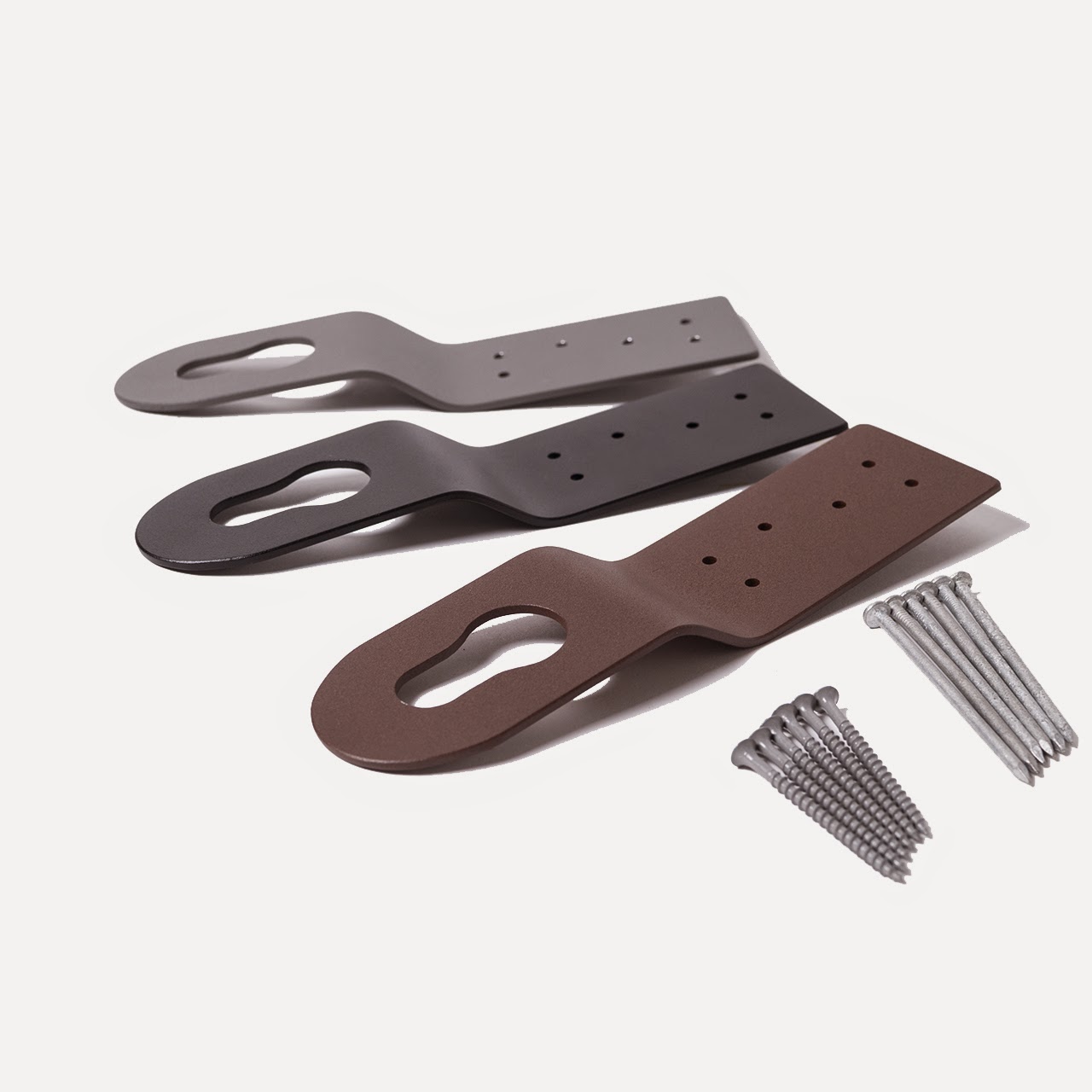
The HitchClip roof anchor system is one of the most revolutionary anchors ever made for several reasons.  These anchors can be used as a single point anchor rated at 5,000 lbs., but even more than that is the multiple uses already available and more to come.  It's fabricated from lightweight, durable, powder coated aluminum and already comes painted in different colors to match your roof.  This design allows you to use as a permanent anchor point or reuse it, as a permanent anchor it is barely noticeable.  Also, if one of their colors doesn't match your roof, these are one of the few anchors that you can actually paint yourself to match the roof.

http://www.harnessland.com/HitchClip-Roof-Jack-p/10572.htmThe patented key hole design is what really sets this anchor apart from any other on the market.  This allows you to use it as more than just a fall protection anchor.  We are talking easily setting up guardrail systems, staging areas, & work platforms.  There is more accessories coming soon, that we will reveal later, but the possibilities are endless with the key hole design.  Anchors easily install with (6) 16d framing nails or (6) #10 x 2-1/2" exterior screws.  If you have been thinking about getting hitched, now is the time.  Hitchclips are rated up to 420 lbs., if using harness and lanyard rated 420 lbs., these anchors are available in 3 packs and 25 contractor packs.

Tuesday, August 12, 2014

Web Retractable Lanyards and OSHA Regulations


retractable web lanyards for fall prevention

It is no secret that many jobs require workers to perform in hazardous conditions. According to the Bureau of Labor Statistics), 4,628 workers died in 2012 while at work, which is the equivalent of 12 deaths every day, and the number of injuries is even more staggering. Among work-related fatalities in construction, the leading cause is falls, and this statistic extends into several other industries where workers perform duties above the ground or floor or a building.

If it sounds like we’re feeding you doomsday information, don’t worry – there’s good news! Following the right safety procedures, particularly via use of equipment like retractable web lanyards, will keep you and others safe as you maneuver around your work site. Here’s a brief review of the web retractable lanyard, one of our most popular pieces of fall safety equipment.

Safety Equipment Regulations for Falls

First, some background: several different fall protection systems are available that allow companies and contractors to comply with federal and state OSHA safety regulations, and each system is categorized into a separate class or group. Fall arrest systems are the most popular because they allow workers to experience the greatest freedom of movement. These systems keep workers from hitting the ground should they fall from distances of 6 feet or higher and usually consist of a body harness that is attached to an anchor by a lanyard.

However, injuries can occur when people fall from distances of less than 6 feet, and specialized safety equipment has been designed to protect people from such occurrences. One of the most popular systems for short-distance fall protection is the retractable web lanyard. A fall of less than six feet might not feel like a big deal; but trust us, it won’t be fun if you hit the ground!

Although retractable web lanyards are designed for short falls, some versions, known as self-retracting lifelines (SRLs) are made to protect people from falls at greater heights. These devices consist of a lightweight cartridge that is securely attached to a body harness or belt, a spring-loaded coil, a durable web strap wrapped around the coil, and a hook or carabiner at the end of the strap.

The SRL is securely attached to a person’s body, and he or she attaches the hook to an anchor. As the person walks away from the anchor, the web strap is drawn out of the cartridge, and it retracts back into the cartridge as the wearer nears the anchor. If the person should fall, the rotation of the coil activates the lifeline to bring the person to a halt before hitting the ground or other obstructions.

Retractable Web Lanyards from HarnessLand.com 

Retractable web lanyards and SRLs are manufactured by a variety of companies, but they must meet specific guidelines before they comply with OSHA standards and those set by the American National Standards Institute (ANSI). In addition, employers, contractors and anyone else who works from heights will want to ensure that the lanyards meet the following conditions:

  • They do not interfere with the tasks that are to be performed.
  • They prevent people from falling or hitting the ground in the event of a fall. 
  • The retractable web lanyards and SRLs are affordably priced. 
When you look to HarnessLand for your safety equipment, you can rest easy knowing that our lanyards comply with all of the specified fall safety regulations as well as the needs of individual contractors. The SRLs offered by HarnessLand range from a 6-foot retractable lanyard for small jobs to a 50-foot web retractable lifeline with abrasion-resistant webbing. We’ve been named an authorized dealer by every brand we carry, and customer service is a top priority for us. So next time you need to scale a building or perform a dangerous task, unleash your inner Spiderman with a web retractable lanyard from HarnessLand!

Thursday, August 7, 2014

Protecting The Public During An Open Construction Project

The safety and risk management procedures to protect construction workers are regulatory requirements, and project managers are usually well-versed in the specific federal or state OSHA mandates. The safety of the general public, on the other hand, is not regulated in the same way. There is no doubt that public safety is an important issue, and many OSHA regulations designed to protect employees also protect the public as an ancillary benefit, but the lack of clear regulations opens construction projects to varied interpretations of phrases such as “reasonable expectations,” “necessary precautions” and “customary measures” when accidents and litigations occur.

If unrestricted, pedestrians and casual passers-by will almost always encroach upon a project’s boundaries. Unlike workers, they will not be wearing hard hats and steel-toed boots. And of course, the vast majority of bystanders have limited or no understanding of basic construction safety precautions. They don’t understand the radius of a crane’s boom or the momentum associated with a suspended girder or generator. They have no experience with falling objects and cannot be expected to know how far a dropped tool can travel on an unfortunate bounce.

Project managers and foremen are not, however, left to devise safety measures on their own. The American National Standard Institute, together with the American Society of Safety Engineers, publishes a comprehensive consensus standard of safety guidelines that contractors and building owners can follow. This standard, titled “ANSI/ASSE A10.34-2001 (R2005), Protection of the Public on or Adjacent to Construction,” is designed to protect the general public from hazards associated with construction activities.

Although project managers are not required to follow the guidelines in this standard, it is always wise to do so. ANSI/ASSE standards are widely recognized by industry, and they are often easier to understand than the regulatory language in OSHA documents. Voluntary adherence to ANSI/ASSE A10.34 demonstrates a concern for public safety, and it serves as evidence that the project utilized the industry’s best practices to manage risks associated with the construction. This is an important point to be able to make when “reasonable expectations,” “necessary precautions” and “customary measures” are discussed at a trial.

The ANSI/ASSE standard for public safety during construction specifically addresses 14 safety hazards that are encountered during construction operations. Warning signs, lighting, netting, flaggers, barricades and the proper method for storing hazardous materials on a job site are all covered. These are issues that require specific safety devices, all of which can be obtained at online safety equipment sites like harnessland.com, but they are also issues that require careful thought and planning before any trenching ever takes place.

Don’t take risks when it comes to public safety. We have all the construction safety equipment you’ll need to keep the public safe during an open construction project!

Thursday, July 3, 2014

Product Review: The Hold Me Lifeline Anchor Device


hold me anchor lifeline

The important part of falling down is getting up again. Better yet, make sure you don't fall in the first place.

Those who work or play at any distance above the ground need to be certain that one false step won't be their last. It's why safety harnesses and special climbing equipment exist. In fact, a person is often only as safe as the strength of the lifeline that supports him.

ANSi is Antsy Over Knots

Although not everyone is aware of it, knots have no place in anyone's lifeline. According to the National Cordage Institute, the use of a knot to secure a safety rope can weaken its strength by as much as 50 percent. In fact, ANSi Z-359.1 strictly inveighs against it. So, how else can you secure your lifeline? The answer is simple: The Hold Me Anchor Lifeline Device can provide a safe connection point with no knots required. Its 5,000-pound capacity puts it well above the general recommendation.

What Is an Anchor Lifeline? 

An anchor lifeline device serves as a knot-free means of integrating a vertical lifeline system with an anchorage connector. Its use will permit supporting heavy loads in the air with no danger of disentanglement.

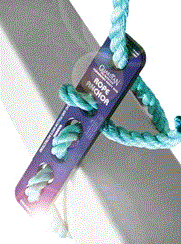
The Hold Me Anchor Lifeline device contains five closely-spaced holes topped by a sixth. Its use entails threading the rope or lanyard tightly through the first four in running-stitch fashion, then pulling it securely through a loop left over after passing it through the fifth. The sixth hole will receive either a carabiner or the free end of the lanyard following its attachment to an anchor point.

How Not to Use the Hold Me Rope Anchor 

Improper use will negate the safety properties of any anchor device. Never, under any circumstances, attach your lifeline to:

- A metal chimney
- A roof hatch or vent
- A television antenna
- A balcony or staircase railing
- A small duct or pipe
- A stationary ladder

No Bottom-Out; No Swing

Always measure carefully to ensure that the rope will reach its greatest length before a falling person or object hits an obstruction. In addition, it's vital to maintain a perpendicular direction between the edge of the lifeline and its anchor to prevent a deadly pendulum effect.
Where distance from the ground is concerned, there can be no skimping on safety. A simple device like the Hold Me Rope Anchor lifeline device is an easy way to meet with ANSi standards while preserving lives in the process.

Monday, June 23, 2014

Prevent Construction Deaths by Following OSHA’s Fall Safety Standards

Do you know what the number one cause of deaths in the construction industry is? It probably won’t come as a surprise that it’s falling. According to OSHA, in 2012 – the time of the last census taken – there were 806 on-the-job deaths in construction, 35% of which were the result of falls. Most falls directly violated OSHA’s fall protection standards. The good news is, prevention is often as simple as learning these standards and adhering to them diligently, using the proper equipment and best practices. Here are just a few to get you started:
  1. Duty to Have Fall Protection – This rule stipulates that anyone working on an unprotected edge needs to take the proper precautions by using a fall protection system like safety nets or a personal fall arrest system. Guardrails can also be used.

  2. Use the Proper Fall Equipment for Its Stipulated Height – If a worker is at six feet or higher, they must have a fall arrest system. It may not sound like much, but workers who are six feet or more above lower levels are at risk for serious injury or death should they fall. Having the proper equipment doesn’t just mean fall arrest systems; it also includes the right kinds of ladders, scaffolds, and safety gear for various heights.

  3. Fall Protection Systems Must Comply With OSHA Standards – OSHA has a specific set of standards related to the efficacy of fall protection systems. These standards range from guardrail height to the amount of weight that screen or mesh should be able to sustain. There’s also a rigorous set of standards related to dee-rings and snaphooks, wires and cables, and horizontal lifelines. All of HarnessLands’s fall arrest systems and fall protection kits comply with OSHA standards.

  4. Every Employee Must Undergo a Safety Training Program – Safety training programs are a must for getting employees up to speed on safety hazards, precautions to take, and the proper use of equipment. Any change in a fall protection system will require a new training to update employees on how to use the new equipment. A good training will also include the proper use of rescue systems and first aid kits.

  5. Prior to Beginning Work, Test Fall Protection Systems and Retractable Lifelines – Before doing anything, it is important to test the gear that you’ll be working with. Testing methods generally involve using weights of the same size and girth of a person, but many people also choose to test much heavier loads. Everything from hooks to self-retracting lifelines must be tested. It may all seem a bit daunting, but complying with OSHA safety standards is an absolute must for anyone in the construction industry. And Harnessland can make it even easier by supplying you with all the right equipment, which complies 100% with OSHA. Don’t take safety for granted!

Tuesday, June 3, 2014

A Review of the Guardian Cyclone Construction Harness

Cyclone Construction Harness


When a construction worker tackles a job around large wind turbines, the level of fall safety needs to be taken up a notch. As they climb the precarious heights to maintain and repair these turbines, construction crews can stay safe and get the protection they need by wearing the Guardian Cyclone construction harness while they work.

The Cyclone features an innovative design that is conducive to the work these specialists carry out each day. Its shoulder adjustment capabilities let workers wear it comfortably without experiencing physical distress, and it features a rope access application failsafe should a rescue be needed.

Keeping the harness untangled also proves to be important while these workers get the job done. With its tangle-free design, the Guardian Cyclone allows workers to ascend ladders in the turbine and focus on their work without fearing that their harness components will get tangled together. Its unique X-back offers perfectly allocated pressure across the shoulders to prevent strain and drive home that tangle-free design.

The Guardian Cyclone provides quick fall-arresting capabilities with its adjustable textile chest attachment loops and dorsal D-ring. In fact, the harness also includes two lateral D-rings, adjustable straps in the chest, leg, and shoulder areas. Workers can keep their tools handy with the tool loops on the back. They can also sit while they work with the harness’ sit-strap extender.

Workers obviously don’t come in one size. The harness is available in sizes small through large to cater to anyone in your crew. Working a job in low visibility? The Cyclone’s bright yellow color will keep you and your crew spotted throughout the job.

Grab the Guardian Cyclone construction harness for you and the rest of your crew at Harness Land. Our competitive sales pricing and free shipping make this one a steal for any construction team.

Monday, June 2, 2014

Calculating Your Fall Distance

When it comes to fall protection at a construction site, having the proper distance measured out can not only limit the impact of a fall but also limit the possibility of injury during that fall. Let’s review the proper calculations you’ll need to take when using both shock absorbing lanyards as well as retractable lifelines. We’ll use average numbers as an example.

Fall Distance Calculation with Shock Absorbing Lanyard & D-Ring Connector
One of the most commonly used shock absorbing lanyards is the six foot variety. Let’s give that a whirl in this example. The lanyard is 6 ft. long, and the max elongation of the absorber during deceleration would be 3.5 ft. An average construction worker is about 6 ft. tall. Let’s add all of those together.

To properly calculate our fall distance, we should add human or product error into the equation. Let’s assume the worker is taller than 6 ft., the harness wasn’t properly fitted, or you miscalculated your distance somewhere else in the equation. Add 3 ft. as a precaution. That leaves us with our suggested safe fall clearance distance of 18.5 ft.

    6 + 3.5 + 6 + 3 = 18.5 ft.

It’s worth noting that you’ll need to add the length of any anchorage connectors or D-rings you happen to use to this equation to get a better calculation of your clearance distance.

Fall Distance Calculation with Retractable Lifeline
What would a suggested fall clearance distance be for a retractable lifeline? A few different factors come into play with this one. Again, let’s consider the worker is of average height for this example.

You’ll need to combine the maximum free fall distance of your lifeline with the max deceleration distance. Most models will have those distances measured out to be 2 ft. and 3.5 ft., respectively. We’ll stick with that for this scenario.

Like last time, let’s toss in a buffer zone to account for human error or a too-tall worker. Tack on 3 ft. to your calculation. That leaves us with a suggested safe fall clearance distance of 14.5 ft.

    2 + 3.5 + 6 + 3 = 14.5 ft.

Just like in the first example, you’ll need to take the length of any added anchorage connectors or D-rings to get a proper calculation for your fall clearance distance.

Don’t cut corners when it comes to protecting yourself and your workers! Plan accordingly, make sure there is clearance space for a potential fall, and calculate fall distances appropriately. Need a short hand version of this? Check out the graphic on our site.

Friday, May 2, 2014

SRLs with a Leading Edge

Fall protection when working on a site that involves open edges and roofs is extremely important, and it requires a different type of SRL. The retract needs to be designed to minimize the impact on itself when a fall occurs going over a ledge, and it needs to be able to be easily positioned either overhead, at foot level, or at the level of the leading edge. Enter the leading edge SRL.

Among the many features of a leading edge SRL is their integrated shock-absorbing pack that helps limit the impact of a fall’s force on the cabling that is in contact with the ledge itself. This removes unwanted strain and keeps the self-retract strong across every inch of its construction. This is where versatility of attachment really comes in handy. A design that allows overhead, foot level, or leading edge placement allows you to cater your attachments to the work environment without worrying about stress on the cable housing. The Guardian Heavy Duty Edge does just that.

guardian leading edge SRL

Leading edge SRLs like the Guardian Heavy Duty Edge Series SRL pictured at right are designed to be compact and lightweight without sacrificing strength, stopping power or comfort. In fact, leading edge SRLs like this one will keep arresting forces below 900lbs and has a swivel top to prevent tangling. Their shock packs spring into action when a cable comes in contact with an edge and will arrest the forces of any fall. These built-in shock packs give you that attachment versatility we’ve been talking about. Other brands and models will require overhead attachments only. Not so with Guardian.

Meeting or exceeding all OSHA and ANSI standards, leading edge SRLs are top of the line and the future of edgework safety. Perfect for roofing jobs and high-rise buildings, leading edge SRLs are a must-have. See for yourself why so many construction firms have turned to leading edge SRLs for their ledge jobs, and give the Guardian Heavy Duty Edge series a go when you’re shopping with Harness Land.

Wednesday, April 30, 2014

A Review of the ExoFit NEX Construction Harness

Finding a construction harness that stands up to the demands of a long shift and keeps you comfortable and safe can be a challenge. The NEX construction harnesses for ExoFit is up to the job. Let’s review some of its features so you can see why selecting the NEX from ExoFit as your new construction harness is a no-brainer.

Made for comfort, convenience and customization, the ExoFit NEX is the perfect choice for any job that requires fall protection and any size worker. Some features of the ExoFit NEX include:

    exofit nex harness
  • Built-in padding on shoulders, hips and legs to prevent slips
  • Breathable fabric lining for moisture control
  • Removable belt for connecting tools
  • Well-placed hook connections on back to prevent tangles
  • Rip-stitch indicators to quickly inspect a harness involved in a fall

The ExoFit brings some new technology to the harness game. Revolver vertical torso adjusters make the harness a gem for workers, regardless of physical build. Tech Lite aluminum D-rings are strong and durable enough to handle the heaviest of loads in the event of a fall. Repel webbing and suspension trauma straps give this harness an unparalleled level of adjustability, comfort and security. In fact, the ExoFit comes with a 30-day comfort guarantee.

Last, but not least, the Duo-Lok Quick Connect buckles make getting in and out of the harness a snap. The Duo-Lok patented design removes any slippage or loosening of the harness webbing – something other quick connects have been known to do. If you’ve thought twice about purchasing a harness with quick connects, the issue has been solved with the ExoFit NEX Duo-Lok System.

Take a look at the ExoFit NEX and see why it’s become such a popular choice for workers looking for added function and comfort to their fall protection gear. Then, do yourself a favor and grab one today.

Thursday, March 27, 2014

The New Class A Retracts

fall safe USA class a retract 7 footNew to the fall safety equipment industry are Class A retractable lifelines. Class A retracts meet the newest ANSI Z359.14 standards, meaning these retracts are top-of-the-line and will keep you and your construction site ahead of the curve when it comes to safety protocol.

You might be wondering what changes came about with ANSI Z359.14. These new standards have increased the test weight for dynamic performance and require that all retractable lifelines be classified as either Class A or Class B based on their performance tests. More specifically, the weight requirement for testing has increased from 220lbs to 282lbs, +/- 2lbs. To be classified as Class A, the arrest distance can’t exceed 24” and the force can’t exceed 1,350lbs with a max peak of 1,800lbs. When environmental conditions (hot, cold or wet) are taken into account, the force can’t exceed 1,575lbs with an identical peak of 1,800lbs. 

Fall Safe USA is currently the only manufacturer that develops Class A web retracts at 11’ in length and shorter. Pictured to the right is their 7’ variety with an aluminum housing and 1” Dynema webbing. The snap hook features a double locking swivel with a 3,600lbs gate rating and a steel carabiner.

All Class A retracts from Fall Safe USA feature a hook rating of 5,000lbs and a max working load of 310lbs. They also meet the OSHA 1926-502 standard as well as ANSI Z359.14-2012 and A10.32 2004 standards. Available in single and double web retracts, these Class A retractable lifelines from Fall Safe USA are a smart choice for any construction team that wants an upgrade to their fall arrest devices.

Tuesday, March 25, 2014

The Innovation of Double Retracts with Cables


The double retract is a new and innovative approach to fall protection equipment. By utilizing two lanyards instead of the traditional one, a double retract more evenly distributes the weight of the wearer, reduces fall distance and stress on the retractable lifeline and removes any tripping hazard. One of their most prominent features, however, is the ability to secure you from two separate beams, rails, or anchor points. This keeps you centered between two points at all times and prevents dangerous dangling and swinging in the event of a fall.
nano-lok edge twin leg SRL 8 foot
Double retracts are ergonomically designed to provide a quick, easy and strong connection to your safety harness while staying out of your way while on the job. With full swivel connections, your range of motion is never impeded and they can connect to vertical or horizontal anchor points easily. They are designed with various connections from carabiners to rebar hooks and come with cables or sturdy webbing depending on your needs and preferences. They are used as 100% tie-offs, making them versatile for a variety of tasks and heights allowing you to leap frog from one anchor point to the next without worry for your safety.

Another feature that makes double retracts so innovative and popular is they eliminate the need to use traditional, two-legged lanyards. This gives the wearer more mobility and comfort, and keeps the retract out from under the feet where it could cause tangling, snags, or trips. The Nano-Lok pictured at right is specially designed for foot level tie-offs to reduce fall length, double retracts feature a shorter cabling length, usually 6 to 8 feet. This makes them perfect for high and tight spots where space is at a premium and you need to avoid clutter. Remember to always reattach a disengaged hook to an anchor point before detaching your active SRL!

Give double cable retracts some consideration when you’re buying new fall protection equipment for your construction team. The peace of mind makes all the difference.

Sunday, March 2, 2014

A Review of the Guardian Beamer 2000 Sliding Beam Anchor

guardian beamer 2000
Guardian has long been known as a reputable brand for fall arrest systems, and their Beamer 2000 takes the cake when it comes to sliding beam anchors. This machined aluminum bar is cut with the utmost precision and is lightweight and easy to use. Slide it up and down steel beams with ease, and keep it firmly in place using its adjustable D-ring. While this sliding beam anchor may be lightweight, don’t let that fool you into thinking it can’t run with the big boys. This Cadillac of sliding beam anchors can handle up to 5,000 lbs. of weight, so you know you’re in good hands the first time you install it at your job site.

The Guardian Beamer 2000 is:
  • Easily installed with simple, one-handed operation
  • Weather resistant
  • Easy to clean off dirt, welding splatter, and other debris
  • Built to meet ANSI standards of safety
  • Extremely lightweight, weighing in at just 4 lbs.
  • Fits a wide range of steel beam thicknesses

Offered at an unbeatable, discounted Harness Land price of no more than $140, this puppy is a steal. It even goes on further discount from time to time, so check out the Guardian Beamer 2000 and see how it can help improve safety and productivity at your job site!